Household Absorption
Indicator Study | Active | As of 2026-08-07 | Freshness 72d
Household Absorption is 'active' with a composite score of 57.2. The hottest components are Income strain 63.1, Debt-service pressure 61.8.
Component Scores
| Component | Score |
|---|---|
| Income strain | 63.09 |
| Spending strain | 47.43 |
| Debt-service pressure | 61.76 |
Current Drivers
| Driver | Component | Score | Raw | Transformed |
|---|---|---|---|---|
| Consumer sentiment | Income strain | 73.35 | 51.70 | -52.20 |
| Household debt service ratio | Debt-service pressure | 61.76 | 11.11 | 11.11 |
| Real personal consumption expenditures | Spending strain | 54.42 | 16955.30 | -2.57 |
| Real disposable personal income | Income strain | 52.83 | 18410.50 | -1.30 |
| Real retail sales | Spending strain | 40.43 | 231630.00 | -2.58 |
Metrics
| Metric | Value |
|---|---|
| Score | 57.21 |
| Freshness Days | 72 |
| Panel As Of Date | 2026-08-07 |
| Source As Of Date | 2026-08-01 |
Charts
Component contribution bars
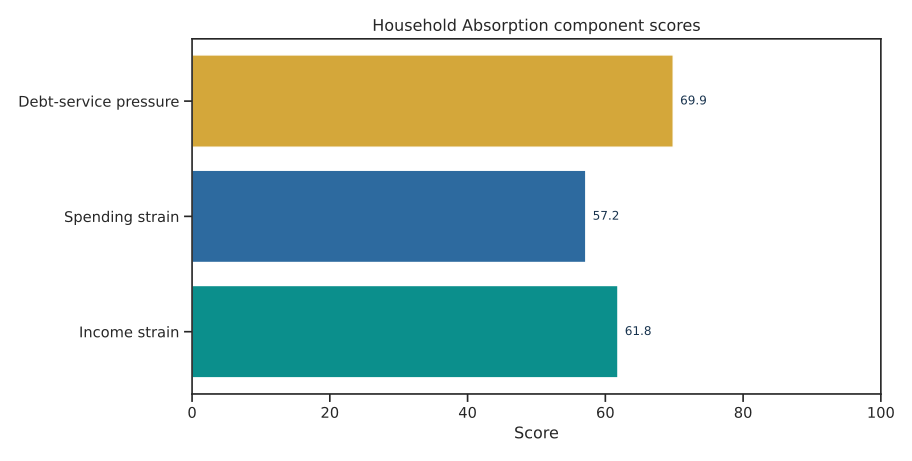
Higher scores indicate more replacement pressure or fragility for this study.
Normalized history panel
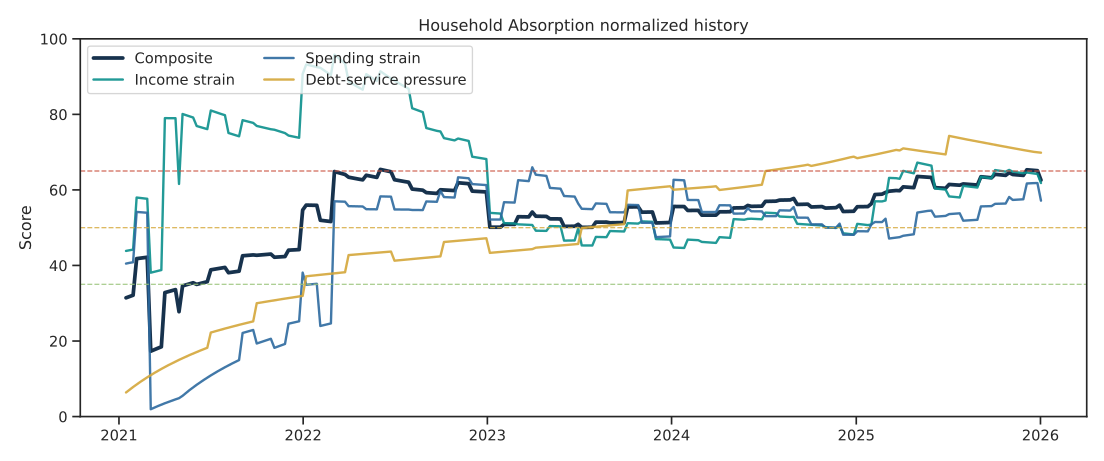
All lines are scored on the same 0-100 scale using trailing z-scores on a weekly Friday panel.
Notes
- Higher scores mean households are absorbing less of the shock through income and spending, and more through strain.
- This study deliberately scores fragility, not resilience, so that it rolls cleanly into the fragility composite.
- Mechanism note: If AI-linked disruption is becoming macro-relevant, it should eventually leak into slower real income growth, weaker spending follow-through, and tighter household cash-flow tolerance.
- Freshness: the stalest source series in this study is 72 day(s) old.
Commentary
Household Absorption is 'active' with a composite score of 57.2. The hottest components are Income strain 63.1, Debt-service pressure 61.8.
Deterministic fallback commentary (AI unavailable): - score: 57.2108 - freshness_days: 72 - panel_as_of_date: 2026-08-07 - source_as_of_date: 2026-08-01 Caveat: This summary is template-based and may miss contextual drivers outside these indicators.