AI Disruption
This section asks a narrower question: is AI showing up in the U.S. macro data yet?
It does not measure AI adoption directly. Instead, it follows a clear set of FRED-based proxy indicators: AI-related capital buildout, weakening in white-collar labor markets, productivity gains that are not translating into payroll growth, household capacity to absorb strain, and signs of credit-market stress.
The purpose is to track when these indicators begin to move together in a way that matters economically. The issue is not just whether AI investment is rising, but whether it is coinciding with labor-market displacement and broader macro pressure that could affect growth, consumer spending, and financial conditions.
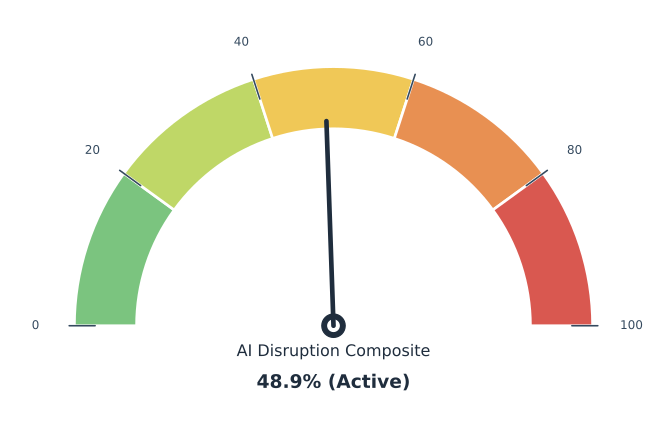
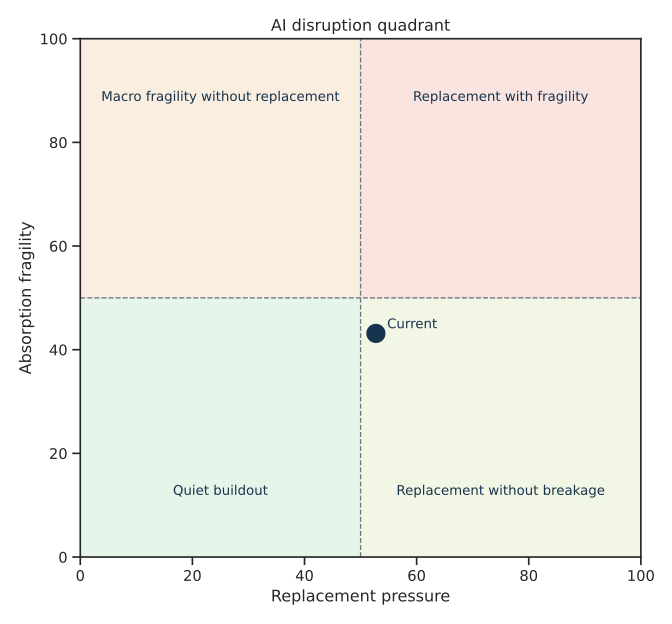
Score Tree
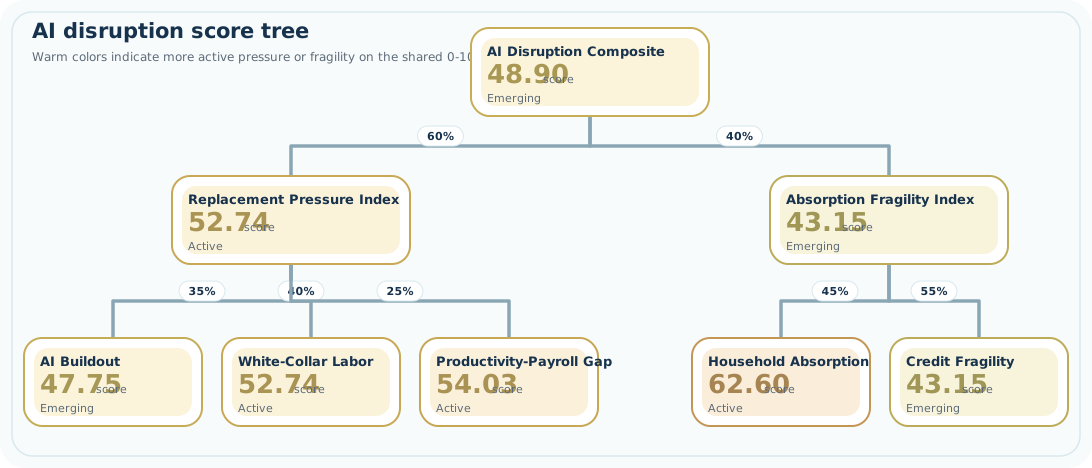
This view shows how the headline AI disruption score breaks into the two parent composites and then into the five underlying study buckets.
Top Drivers
| Driver | Source Study | Score | Composite Impact |
|---|---|---|---|
| Private fixed investment in intellectual property products | Replacement Pressure Index | 72.68 | 43.61 |
| Professional and business services hires | Replacement Pressure Index | 69.82 | 41.89 |
| Information processing equipment momentum | Replacement Pressure Index | 67.59 | 40.56 |
| Semiconductor industrial production | Replacement Pressure Index | 58.18 | 34.91 |
| Initial unemployment claims | Replacement Pressure Index | 56.55 | 33.93 |
This dashboard is an AI-sensitive proxy monitor. It tracks whether AI-enabling buildout, labor softness, household strain, and credit fragility are lining up in a macro-relevant way.
Study State Matrix
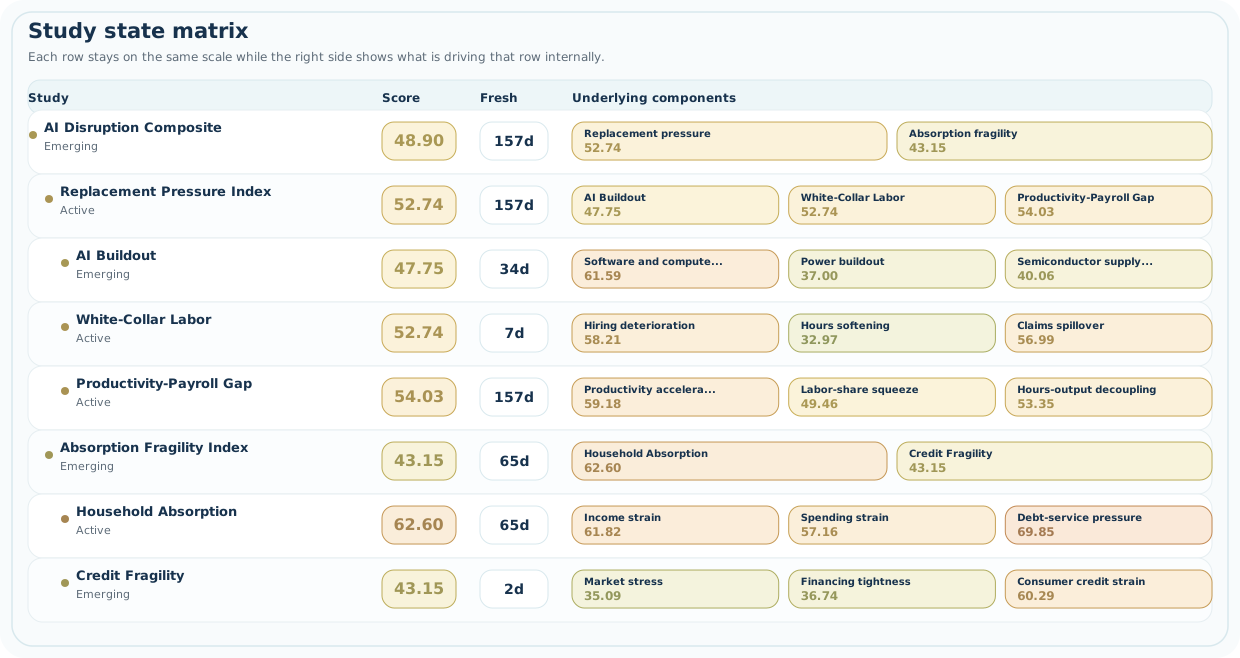
This denser panel keeps every AI study on one 0-100 scale and shows the internal component mix driving each score.
Study Index
AI Buildout
Indicator Study | Emerging | As of 2026-02-06 | Freshness 60d
AI Buildout is 'emerging' with a composite score of 47.1. The hottest components are Software and compute capex 59.4, Semiconductor supply tightness 40.6.
Credit Fragility
Indicator Study | Emerging | As of 2026-04-03 | Freshness 2d
Credit Fragility is 'emerging' with a composite score of 48.5. The hottest components are Consumer credit strain 59.9, Financing tightness 47.3.
Household Absorption
Indicator Study | Active | As of 2026-02-06 | Freshness 60d
Household Absorption is 'active' with a composite score of 61.5. The hottest components are Debt-service pressure 71.4, Income strain 59.0.
Productivity-Payroll Gap
Indicator Study | Active | As of 2025-10-03 | Freshness 183d
Productivity-Payroll Gap is 'active' with a composite score of 52.9. The hottest components are Productivity acceleration 57.0, Hours-output decoupling 52.3.
White-Collar Labor
Indicator Study | Active | As of 2026-03-27 | Freshness 12d
White-Collar Labor is 'active' with a composite score of 52.1. The hottest components are Hiring deterioration 58.2, Claims spillover 56.0.
Absorption Fragility Index
Composite Study | Emerging | As of 2026-04-03 | Freshness 60d
Absorption Fragility Index is 'emerging' with a score of 48.5. Child studies are contributing as follows: Household Absorption 61.5, Credit Fragility 48.5.
Replacement Pressure Index
Composite Study | Active | As of 2026-03-27 | Freshness 183d
Replacement Pressure Index is 'active' with a score of 52.1. Child studies are contributing as follows: AI Buildout 47.1, White-Collar Labor 52.1, Productivity-Payroll Gap 52.9.
AI Disruption Composite
Composite Study | Emerging | As of 2026-04-03 | Freshness 183d
AI disruption is 'emerging' on the dashboard this week. Replacement pressure scores 52.1, fragility scores 48.5, and the blended composite is 48.5.
Coverage: United States only. Mixed-frequency FRED data is aligned to a weekly Friday panel and freshness is shown explicitly.