Credit Fragility
Indicator Study | Emerging | As of 2026-04-03 | Freshness 2d
Credit Fragility is 'emerging' with a composite score of 48.5. The hottest components are Consumer credit strain 59.9, Financing tightness 47.3.
Component Scores
| Component | Score |
|---|---|
| Market stress | 40.84 |
| Financing tightness | 47.28 |
| Consumer credit strain | 59.90 |
Current Drivers
| Driver | Component | Score | Raw | Transformed |
|---|---|---|---|---|
| Delinquency rate on credit-card loans | Consumer credit strain | 59.90 | 2.94 | 2.94 |
| Adjusted National Financial Conditions Index | Financing tightness | 47.28 | -0.43 | -0.43 |
| High-yield option-adjusted spread | Market stress | 42.62 | 3.28 | 3.28 |
| BBB option-adjusted spread | Market stress | 39.06 | 1.13 | 1.13 |
Metrics
| Metric | Value |
|---|---|
| Score | 48.49 |
| Freshness Days | 2 |
| Panel As Of Date | 2026-04-03 |
| Source As Of Date | 2026-03-31 |
| Macro Stress Probability | 0.00 |
Charts
Component contribution bars
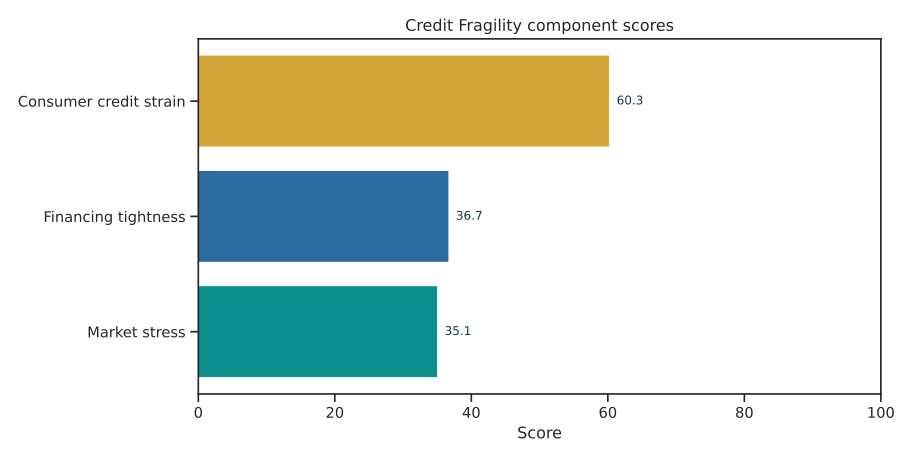
Higher scores indicate more replacement pressure or fragility for this study.
Normalized history panel
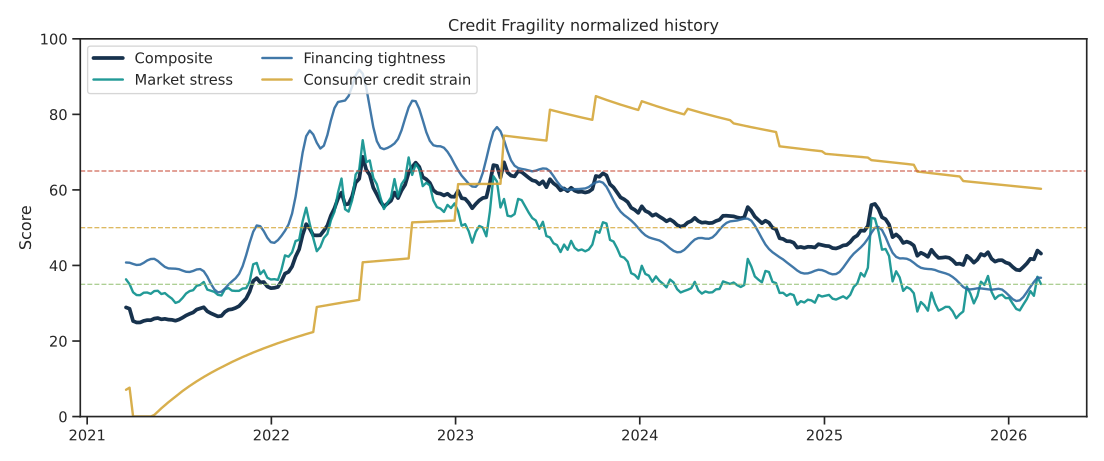
All lines are scored on the same 0-100 scale using trailing z-scores on a weekly Friday panel.
Macro-stress probability overlay
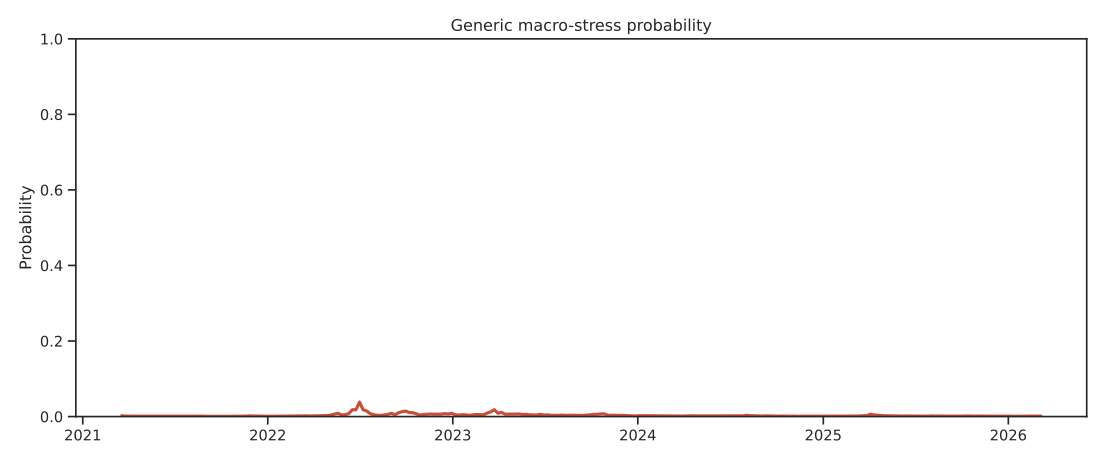
This logistic overlay uses claims, spreads, and ANFCI to estimate generic macro stress, not AI causality.
Notes
- Higher scores mean credit markets are less able to absorb an income shock.
- The macro-stress probability overlay is trained on broad historical stress, not on AI-specific episodes.
- Mechanism note: Once labor and demand soften, spreads, funding conditions, and consumer delinquencies are the channels through which a localized replacement shock becomes a broader macro break.
- Freshness: the stalest source series in this study is 2 day(s) old.
Commentary
Credit fragility is emerging with a composite score of 48.5, driven by elevated consumer credit strain (59.9) and tightening financing conditions (47.3).
- Composite index: 48.5 (up from ~45 a month earlier).
- Consumer credit strain: 59.9, the highest component, reflecting rising delinquency rates on credit‑card loans.
- Financing tightness: 47.3, signaling tighter credit markets as measured by the Adjusted National Financial Conditions Index.
Caveat: The index is still classified as emerging with limited historical depth, and macro‑stress probability, though low, can shift quickly.