Absorption Fragility Index
Composite Study | Emerging | As of 2026-04-03 | Freshness 60d
Absorption Fragility Index is 'emerging' with a score of 48.5. Child studies are contributing as follows: Household Absorption 61.5, Credit Fragility 48.5.
48.49
Score
60 day(s)
Freshness
2026-04-03
As Of
Component Scores
| Component | Score |
|---|---|
| Household Absorption | 61.51 |
| Credit Fragility | 48.49 |
Current Drivers
| Driver | Component | Score | Raw | Transformed |
|---|---|---|---|---|
| Delinquency rate on credit-card loans | Consumer credit strain | 59.90 | 2.94 | 2.94 |
| Household debt service ratio | Debt-service pressure | 71.45 | 11.32 | 11.32 |
| Consumer sentiment | Income strain | 67.75 | 56.60 | -56.60 |
| Real personal consumption expenditures | Spending strain | 58.79 | 16700.20 | -2.47 |
| Adjusted National Financial Conditions Index | Financing tightness | 47.28 | -0.43 | -0.43 |
| Real retail sales | Spending strain | 52.30 | 225483.00 | -1.25 |
| High-yield option-adjusted spread | Market stress | 42.62 | 3.28 | 3.28 |
| Real disposable personal income | Income strain | 50.19 | 18203.20 | -1.63 |
Metrics
| Metric | Value |
|---|---|
| Score | 48.49 |
| Overlay Score | N/A |
| Freshness Days | 60 |
Charts
Composite score history
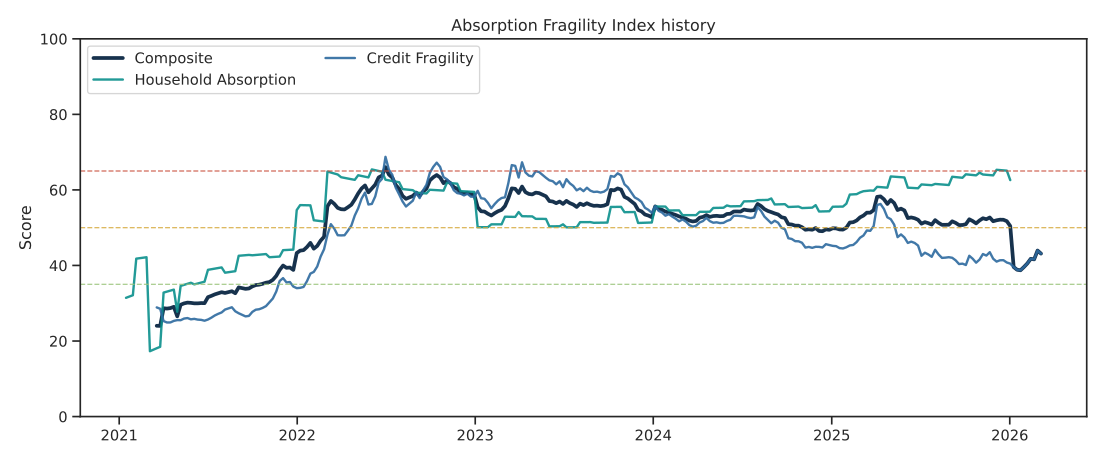
Composite history is built only from child-study score histories and fixed weights.
Current component waterfall
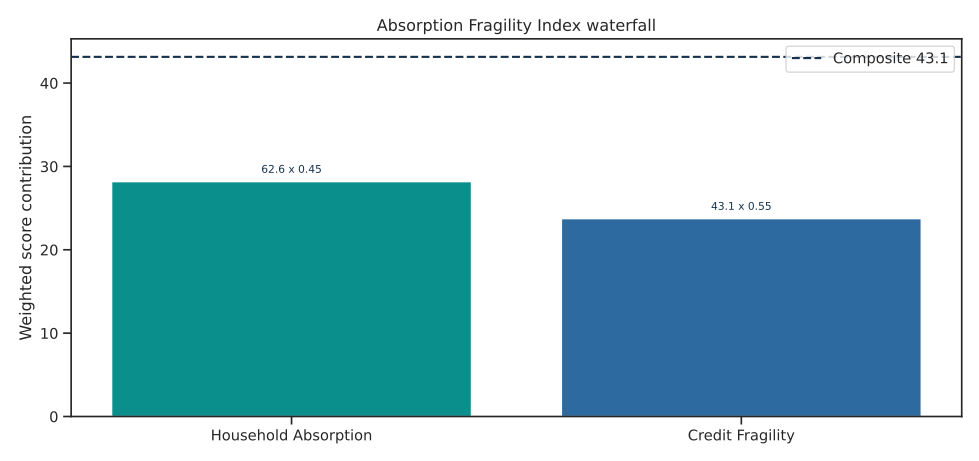
The waterfall shows each child study's weighted contribution to the latest composite score.
Notes
- Higher scores mean households and credit markets are absorbing less of the shock and transmitting more of it forward.
Commentary
The Composite Absorption Fragility Index is emerging, indicating modest but growing household financial stress while macro‑stress probability stays very low.
- Composite score of 48.5 shows a modest rise, reflecting heightened consumer credit strain and tighter financing.
- Household Absorption score of 61.5 driven by high debt‑service pressure (71.4) and income strain (~59).
- Key credit‑fragility drivers: delinquency rate on credit‑card loans (59.9) and ANFCI (47.3).
Caveat: Data are lagged (up to 60 days) and based on a limited set of components, so recent movements may not fully reflect current conditions.